Sooty Bark Disease
Why It’s Important To Remove Trees With Sooty Bark Disease
What is Sooty Bark Disease?
Sooty bark disease is a serious fungal infection of maple trees caused by the fungus Cryptostroma corticale. Although the fungus can remain dormant within a healthy tree, it commonly becomes active when the tree is placed under environmental stress, particularly during prolonged periods of hot, dry weather. As the disease progresses, it develops beneath the bark, causing it to crack and peel away, exposing a distinctive black, powdery layer of fungal spores. Once symptoms become visible, the internal wood is often already extensively affected, reducing the tree’s structural integrity and increasing the risk of branch or whole-tree failure. Early identification and appropriate management are therefore essential to help minimise potential safety risks and prevent further spread of spores.
How to Identify Sooty Bark Disease
One of the biggest challenges with sooty bark disease is that it often remains hidden until the infection has become well established. The fungus develops beneath the bark, meaning many trees show few external signs during the early stages. Once symptoms become visible, the tree may already be significantly weakened.
If you own a maple tree, look out for the following warning signs:
Black, Soot-Like Spores
The most recognisable sign of sooty bark disease is a dense layer of black, powdery spores hidden beneath the bark. As the bark begins to crack or peel away, these spores become visible, giving the trunk or branches a burnt or soot-covered appearance.
Bark Cracking and Peeling
The bark may split vertically before lifting away from the trunk. This exposes the characteristic black fungal growth beneath and indicates that the disease has advanced.
Leaf Wilt and Premature Leaf Drop
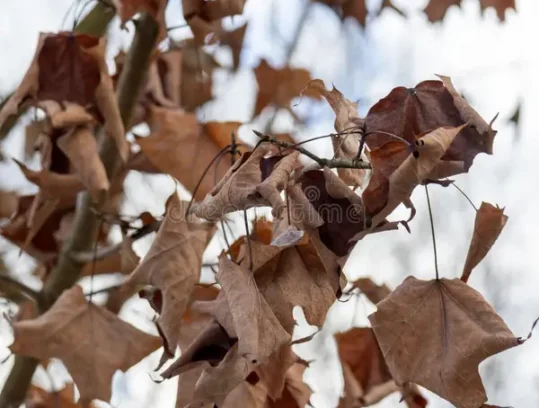
Infected trees often struggle to transport water and nutrients effectively. As a result, leaves may wilt, turn brown, or fall earlier than expected, particularly during warm, dry summers.
Crown Dieback
As the fungus spreads, branches begin to die back, reducing the density of the canopy. Dead branches become increasingly brittle and pose a greater risk of failure.

Tree Decline Following Hot, Dry Weather
Sooty bark disease is closely linked to environmental stress. Trees that have experienced prolonged drought or extreme heat are far more susceptible to infection. If a maple tree begins declining after periods of dry weather, it should be inspected by a qualified arborist.
If you suspect your tree has sooty bark disease, it is important not to disturb the bark yourself, as this can release thousands of fungal spores into the air.
Why Is Sooty Bark Disease Dangerous?
Yes. Sooty bark disease is considered a significant hazard because it affects both the structural integrity of the tree and human health.
As the fungus progresses, it causes internal decay that weakens the timber. While some infected trees remain standing for several years, others deteriorate rapidly and can fail without warning.
For these reasons, any suspected case should be professionally assessed before the tree becomes a serious safety concern.
An infected tree may pose risks such as:
- Falling branches
- Stem or trunk failure
- Increased risk during storms and high winds
- Damage to nearby homes, vehicles and structures
- Danger to pedestrians and road users
- Airborne fungal spores released when the bark is disturbed
Can Sooty Bark Disease Affect Human Health?
Unlike many tree diseases, sooty bark disease can have serious health implications.
The fungus (Cryptostroma corticale) produces millions of microscopic spores that become airborne when infected bark is disturbed during tree work, logging or even natural bark loss.
Repeated exposure to these spores can cause Maple Bark Disease, a rare form of hypersensitivity pneumonitis that affects the lungs.
Symptoms can include:
- Persistent cough
- Shortness of breath
- Fever or flu-like symptoms
- Chest tightness
- Fatigue
Although the condition is uncommon, appropriate control measures should always be taken when working on infected trees to minimise exposure to airborne spores.
How We Safely Remove Trees with Sooty Bark Disease
At Maplebeck Tree Care, safety is our highest priority. Trees affected by sooty bark disease require specialist handling to protect our team, our customers and the surrounding environment.
Professional Tree Inspection
Every project begins with a detailed inspection by one of our qualified arborists. We assess the condition of the tree, determine the level of infection and identify any structural defects that could affect the removal process.
Site Risk Assessment
Before work starts, we complete a comprehensive risk assessment. This allows us to identify hazards, establish exclusion zones and ensure members of the public, neighbouring properties and nearby roads remain protected throughout the operation.
Specialist Personal Protective Equipment (PPE)
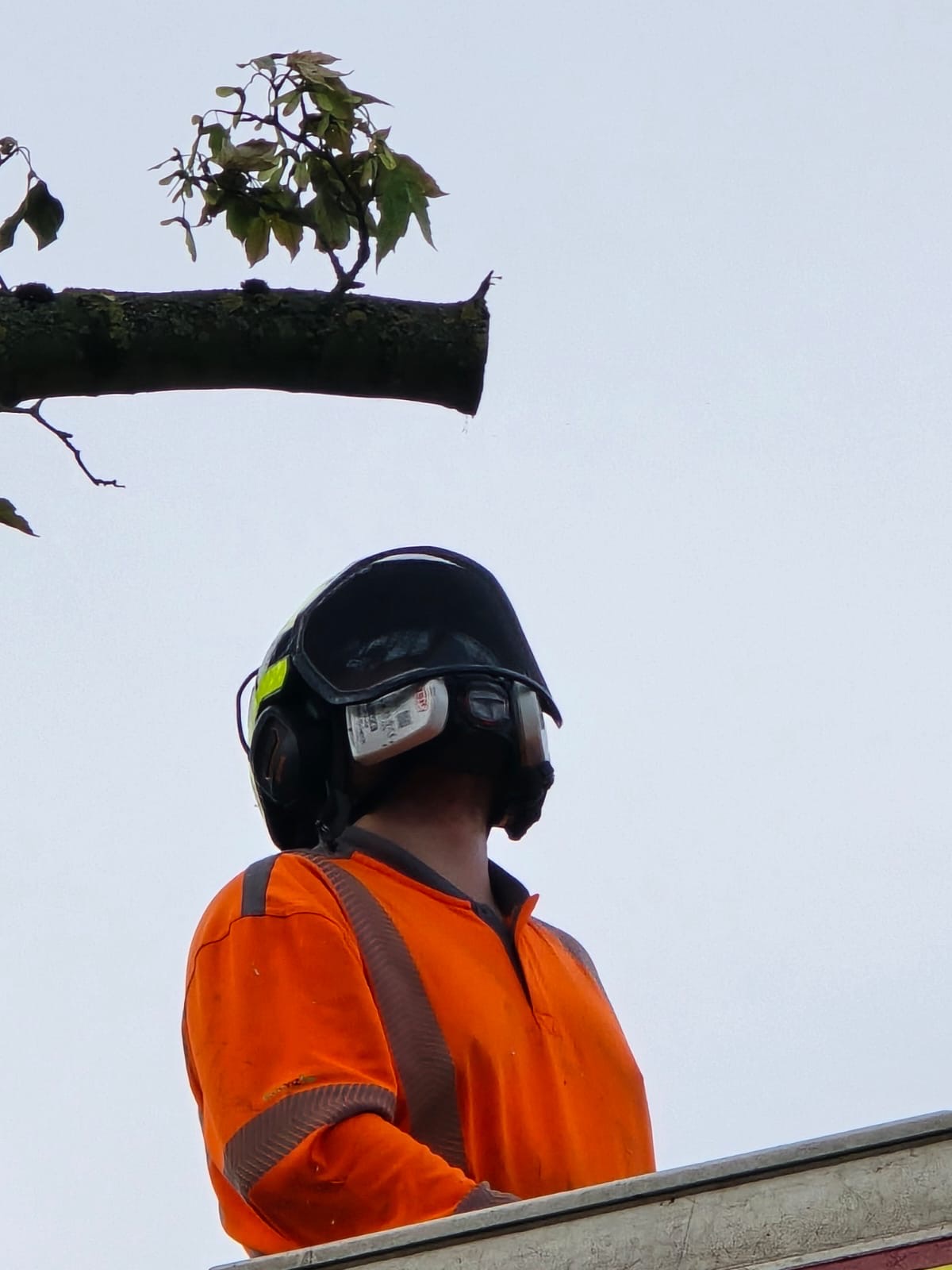
Our trained operatives wear appropriate PPE and respiratory protective equipment (RPE) specifically selected to reduce exposure to airborne fungal spores. Depending on the task, this may include:
- Disposable protective coveralls
- Protective gloves
- Safety helmets with eye protection
- Respiratory protective equipment (RPE)
- Chainsaw protective clothing where required
Equipment is cleaned or disposed of correctly after use to minimise the risk of cross-contamination.
Reducing the Release of Fungal Spores
Our team uses carefully planned working methods to minimise disturbance of infected bark wherever possible. By reducing unnecessary handling and controlling the removal process, we help limit the release of airborne spores.
Environmentally Responsible Tree Disposal
Once removed, infected material is handled responsibly and disposed of in accordance with current environmental guidance and industry best practice. Machinery, tools and vehicles are cleaned following completion of the work to reduce the possibility of transferring spores to other locations.
Qualified and Experienced Arborists
Removing a tree infected with sooty bark disease should never be attempted without the correct training, equipment and experience. Our qualified arborists have the knowledge and specialist equipment needed to safely assess, dismantle and remove infected trees while protecting people, property and the surrounding environment.
If you believe your maple tree may be infected with sooty bark disease, contact Maplebeck Tree Care to arrange a professional inspection. Early diagnosis can help reduce risks, protect nearby trees and ensure the safest course of action is taken.